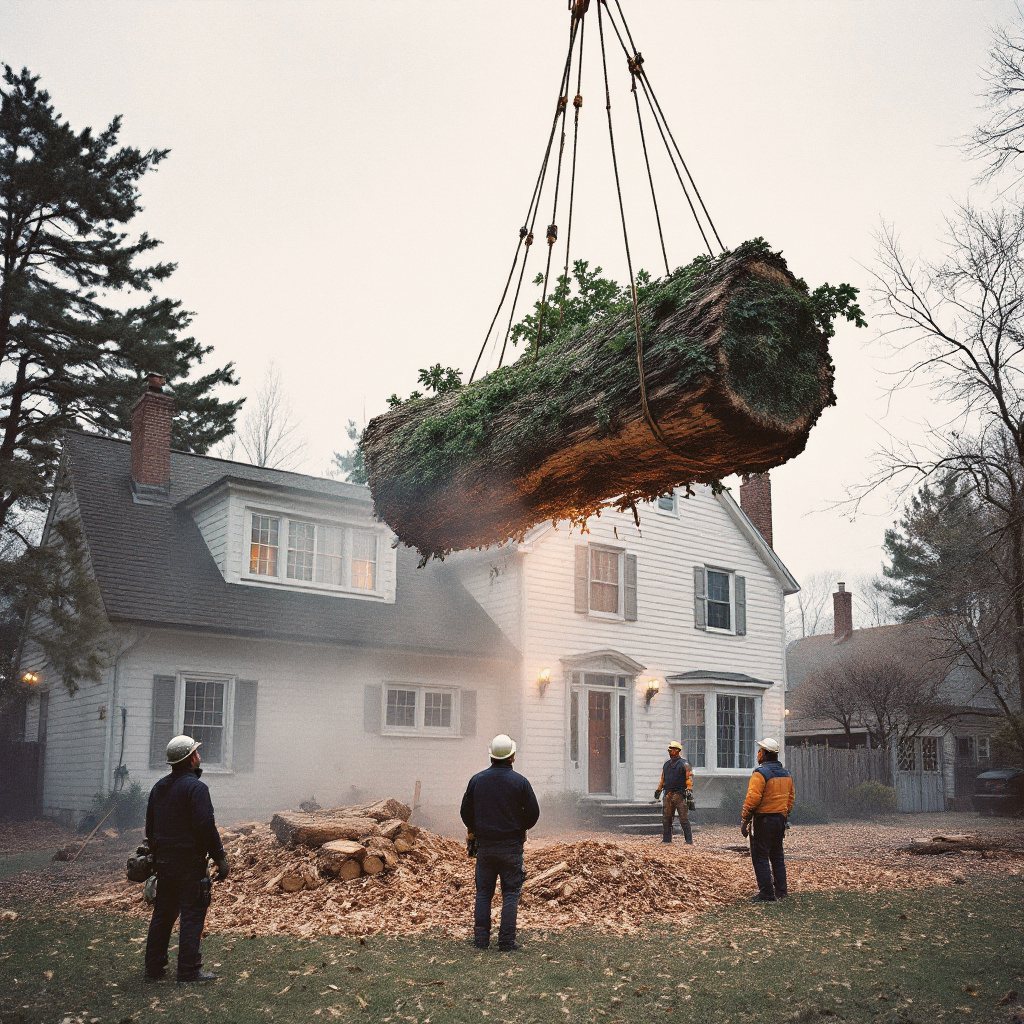
Whether it can fall whole in an open yard or has to come down in rigged pieces over your roofline, removal is a sequencing problem — and sequencing is the job.
Get a Free Estimate Call (317) 406-4920Some removals announce themselves: the ash that leafed out bare, the silver maple split down a codominant stem after a June storm, the leaner that moved another few degrees over the neighbor's fence. Others are judgment calls — roots heaving the driveway, a canopy shading the roof into moss, a species planted three feet from the foundation thirty years ago. We give you the honest read either way, including the times pruning or cabling can save a tree you'd rather keep. About one estimate in five ends with us talking someone out of a removal, and we consider those good visits.
The emerald ash borer worked through Boone County years ago, and every untreated ash it touched is now standing deadwood. Dead ash doesn't fail like other trees: it goes brittle from the top down, sheds big limbs without wind, and becomes genuinely unsafe to climb the longer it stands. That's why ash removals get more expensive with each year of delay — past a certain point a climber can't trust the wood and the job becomes bucket or crane work. If you've got a bare ash near anything you care about, this season beats next season, every time.
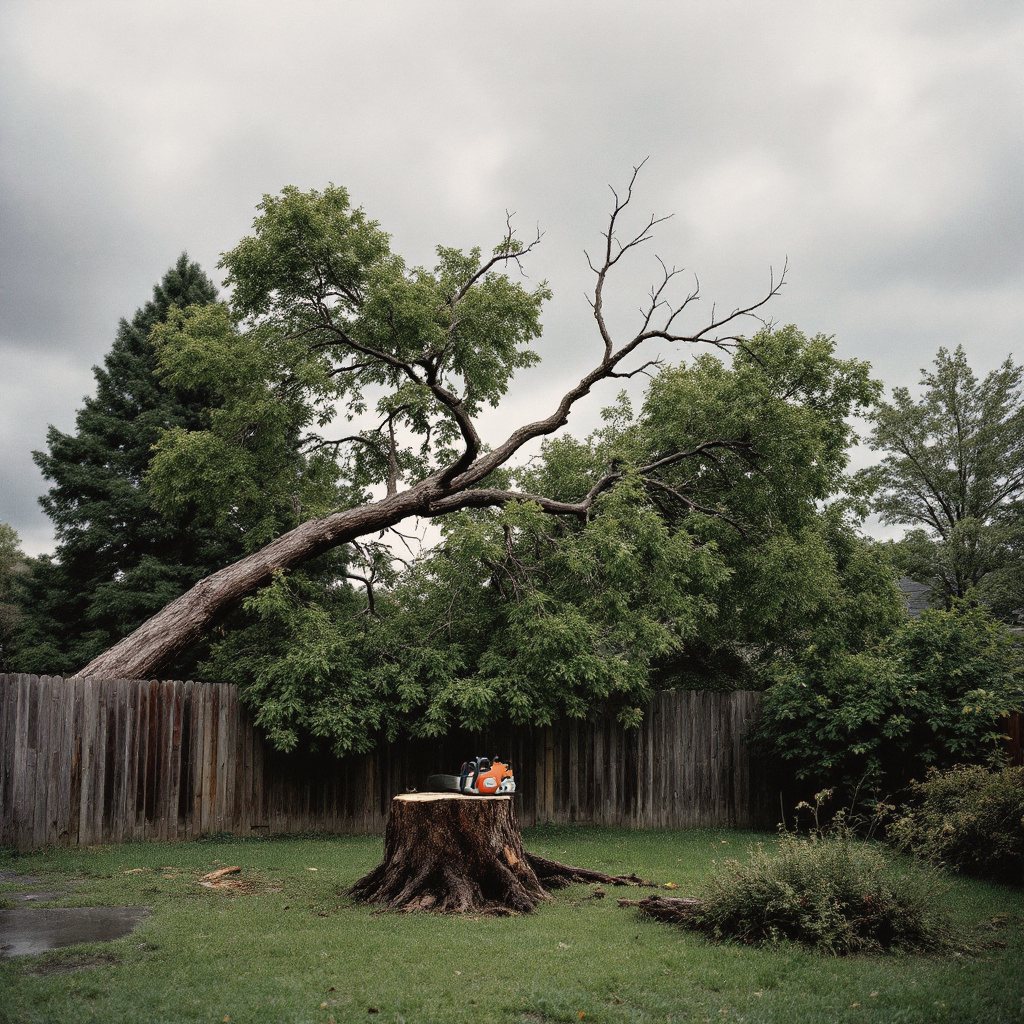
Your call, and the estimate prices each path separately: haul everything and leave lawn; chip the brush and leave rounds bucked to firewood length; or leave it all for your own splitter. Stump grinding gets quoted alongside every removal — it's cheapest while the crew and equipment are already on site, and most people are glad they added it. See stump grinding for the details.
Boone County removals mostly land between $400 for small ornamentals and $1,500–$2,500 for large hardwoods over structures; crane-assisted dead ash can run past that. The number moves with height, trunk diameter, what the tree can hit, and how much rigging the drop zone demands. The honest answer is the written estimate — free, itemized, and it holds. Bring us a competitor's quote and we'll happily walk you through any line where the numbers differ.
If any part of the tree sits within about ten feet of the service drop to your house, the utility usually needs to sleeve or drop the line first — we coordinate that timing routinely and flag it at the estimate. And if the removal follows storm damage to a structure, we document the scene before touching it and itemize hazard work separately, because adjusters care and smooth claims are part of the service.
